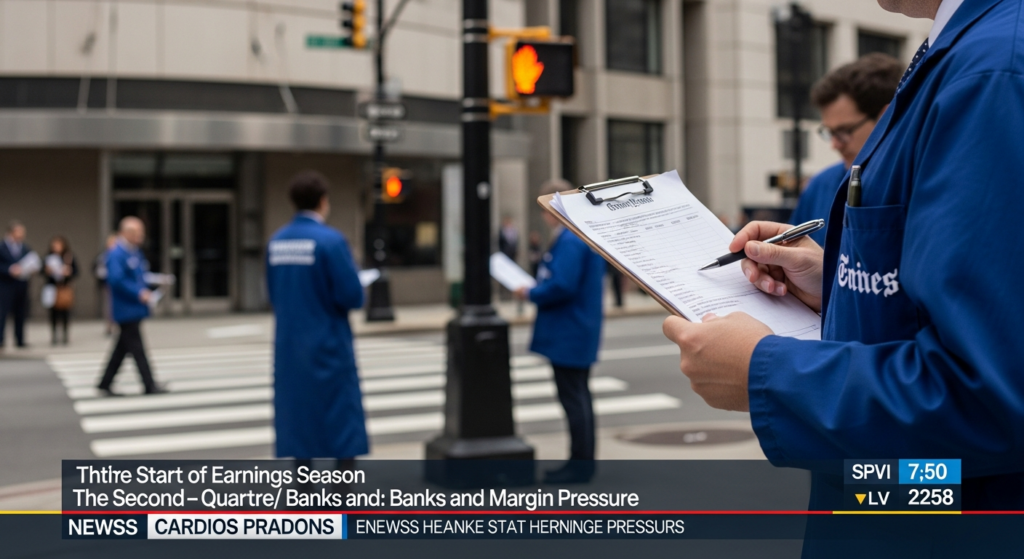
Second-quarter earnings season officially commenced this week, with financial institutions leading the initial wave of corporate disclosures. Investors are closely scrutinizing these reports, particularly focusing on the performance of banks, the pressure on profit margins across various sectors, and forward-looking guidance from companies. For communities like Florence, these national trends offer a crucial barometer for the local economic landscape, influencing everything from employment prospects to the cost of borrowing for businesses and households.
The broader economic environment continues to be shaped by persistent inflation and the trajectory of interest rates. While some inflationary pressures have shown signs of moderation, the Federal Reserve’s actions over the past year have significantly altered the cost of capital. This backdrop means that companies’ abilities to manage expenses, maintain pricing power, and navigate shifting consumer behaviors are under intense examination. The interplay of these factors will dictate the health of various industries and, by extension, the economic vitality of regions such as the Pee Dee.
Within the banking sector, the primary focus for analysts is on net interest margins—the difference between the interest banks earn on loans and the interest they pay on deposits. Higher interest rates have generally benefited banks by allowing them to charge more for loans, but competition for deposits has also intensified, potentially compressing these margins. Loan demand, particularly for mortgages and commercial real estate, is another key indicator. Any slowdown in lending activity could signal broader economic deceleration, impacting the availability of credit for new investments and expansions across Florence and beyond.
These national banking trends have direct implications for the economic activity within Florence. When credit becomes tighter or more expensive, it can slow down business expansion, reduce consumer borrowing for major purchases, and affect the overall liquidity in the market. Local businesses, from small enterprises to major employers, rely on access to capital for operations, inventory, and growth initiatives. Changes in interest rates and loan availability can therefore ripple through the local economy, influencing hiring decisions and investment plans.
Major employers in Florence are particularly sensitive to these macroeconomic shifts. Institutions like McLeod Health and MUSC Health Florence Medical Center, critical components of the local economy, often undertake significant capital projects that require substantial financing. Changes in interest rates can directly impact the cost of these projects, potentially affecting expansion plans or the ability to invest in new technologies. Furthermore, consumer conditions, including employment stability and disposable income, can influence patient volumes and the ability of individuals to cover healthcare costs.
Similarly, manufacturing and logistics giants such as Honda of South Carolina Mfg. Inc., Sonoco Products Company, Walmart Associates Inc., and QVC Inc. face distinct challenges and opportunities. Honda and Sonoco, as manufacturers, are affected by the cost of raw materials, supply chain financing, and consumer demand for their end products. Walmart and QVC, as major retailers and logistics hubs, are directly tied to consumer spending habits. When households face higher costs of living or uncertainty, discretionary spending often declines, impacting the revenues and profitability of these large employers in Florence.
Florence households are also directly impacted by the outcomes of earnings season, particularly concerning interest rates and consumer credit. Mortgage rates, auto loan rates, and credit card interest rates are all influenced by the broader financial environment. Higher rates can increase the cost of homeownership, make car purchases more expensive, and add to the burden of existing debt. The employment outlook, tied to the performance of local and regional businesses, remains a critical concern for families navigating the current economic climate.
As companies continue to release their second-quarter results, investors will be closely watching not just the past performance, but also the forward-looking guidance provided by executives. These outlooks, covering expectations for revenue, profit margins, and capital expenditures for the remainder of the year, will offer crucial insights into corporate confidence and the anticipated economic trajectory. The guidance will inform decisions across various sectors, from manufacturing to healthcare, affecting the economic landscape in Florence and the wider Pee Dee region.
### Why it matters in Florence
The start of second-quarter earnings season holds significant implications for Florence, a city whose economic stability is closely tied to its major employers and the financial well-being of its residents. The performance of regional banks and the broader trends in interest rates and consumer spending directly affect institutions like McLeod Health, which relies on access to capital for its operations and expansion, and companies such as Honda of South Carolina Mfg. Inc., whose production and sales are sensitive to consumer demand and financing costs. For households across Florence, these earnings reports indirectly influence everything from mortgage rates and job security to the cost of everyday goods, making the national financial narrative a critical component of local economic health.