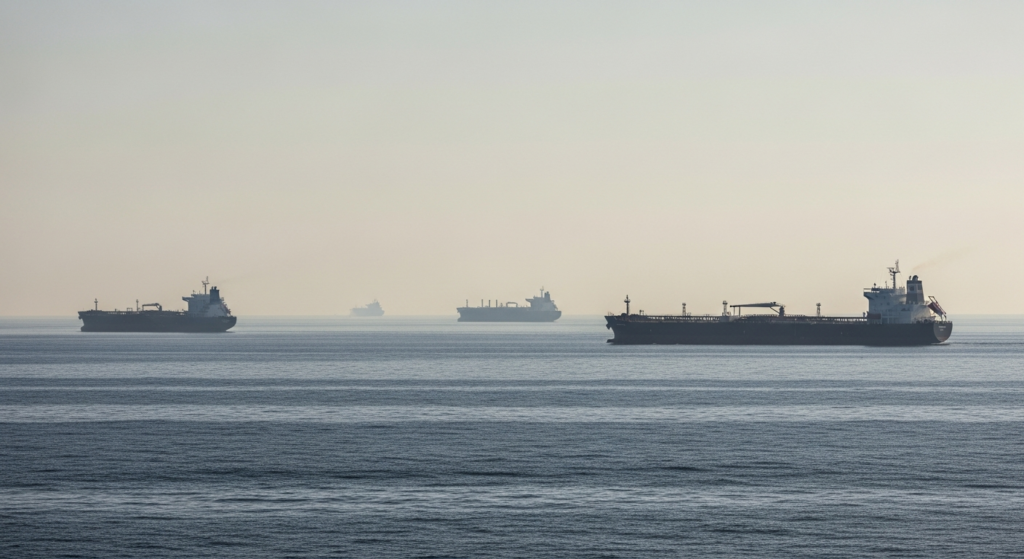
Global energy markets reacted sharply this week following renewed hostilities between the United States and Iran, centered on Iranian ports and the strategically vital Strait of Hormuz. The escalation has prompted the United States to reimpose a blockade on Iranian ports, a move that has immediately translated into higher oil prices and heightened concerns across the international shipping industry.
Independent international and business coverage confirmed the renewed U.S.-Iran hostilities around the Strait of Hormuz during the July 15 cycle. This development has quickly reignited anxieties about the stability of global crude flows, given the waterway’s indispensable role in international energy trade. Energy-market reporting has directly linked this escalation to a significant uptick in oil prices, which have reached a one-month high, underscoring the market’s sensitivity to geopolitical tensions in the region.
The Strait of Hormuz, a narrow sea passage connecting the Persian Gulf to the open ocean, is one of the world’s most critical maritime chokepoints. An estimated one-fifth of the world’s total petroleum consumption, including crude oil and liquefied natural gas, passes through this strait daily. Its strategic importance cannot be overstated; any disruption to shipping in this waterway has immediate and far-reaching implications for global energy supplies and prices. The reimposition of a blockade by the United States signals a significant hardening of policy, aiming to restrict maritime traffic around Iranian ports and, by extension, influence Iran’s access to international trade routes.
The U.S. action follows a period of heightened tensions and reported attacks in the region, which have contributed to the decision to resume the port blockade. While specific details regarding the nature of the attacks or casualties remain unverified in public reporting, the confirmed escalation and the U.S. response have been sufficient to trigger a strong reaction in commodity markets. The primary concern for shipping companies now revolves around the increased risk of transit through the Strait, potentially leading to higher insurance premiums, longer transit times due to rerouting, and overall increased operational costs for vessels navigating the area.
For energy markets, the immediate consequence has been a surge in crude oil prices. Traders and analysts are factoring in the potential for supply disruptions, even if theoretical, given the history of tensions in the Strait. The price of oil hitting a one-month high reflects this market anxiety, as global economies are heavily reliant on stable and affordable energy supplies. A sustained increase in oil prices can have a cascading effect, impacting everything from transportation costs to manufacturing expenses and, ultimately, consumer prices for a wide range of goods and services.
The renewed hostilities and the U.S. blockade represent a significant development in international relations, with implications extending beyond the immediate geopolitical sphere. The focus remains on the confirmed conflict, shipping, and energy-risk context, with reports carefully avoiding unverified casualty, targeting, or tactical claims. The situation underscores the fragility of global supply chains and the interconnectedness of international security with economic stability.
The broader economic impact of such an escalation is multifaceted. Higher fuel costs for shipping translate directly into increased expenses for importing and exporting goods. This can affect the cost of raw materials for industries and the price of finished products on store shelves. For consumers, the most immediate and noticeable effect is often seen at the gas pump, where rising crude oil prices quickly lead to higher gasoline prices. Beyond direct fuel costs, businesses that rely heavily on transportation, such as logistics companies, agricultural producers, and retailers, will face increased operational burdens, which may eventually be passed on to consumers.
### Why it matters in Florence
The global rise in oil prices stemming from the U.S.-Iran escalation in the Strait of Hormuz will have tangible effects on the community in Florence. Residents commuting to major employers like McLeod Health or Honda of South Carolina Mfg. Inc. will likely experience higher costs for gasoline, impacting household budgets. Businesses across Florence County, from small local shops to larger operations, will face increased expenses for transportation of goods and energy consumption, potentially influencing pricing and operational decisions. The regional economy, which relies on a robust transportation network for agriculture and industry, could see ripple effects as supply chain costs climb. For institutions like Florence-Darlington Technical College, students and staff who commute from surrounding areas may feel the pinch of elevated fuel prices, adding another layer of financial consideration to daily life in Florence.