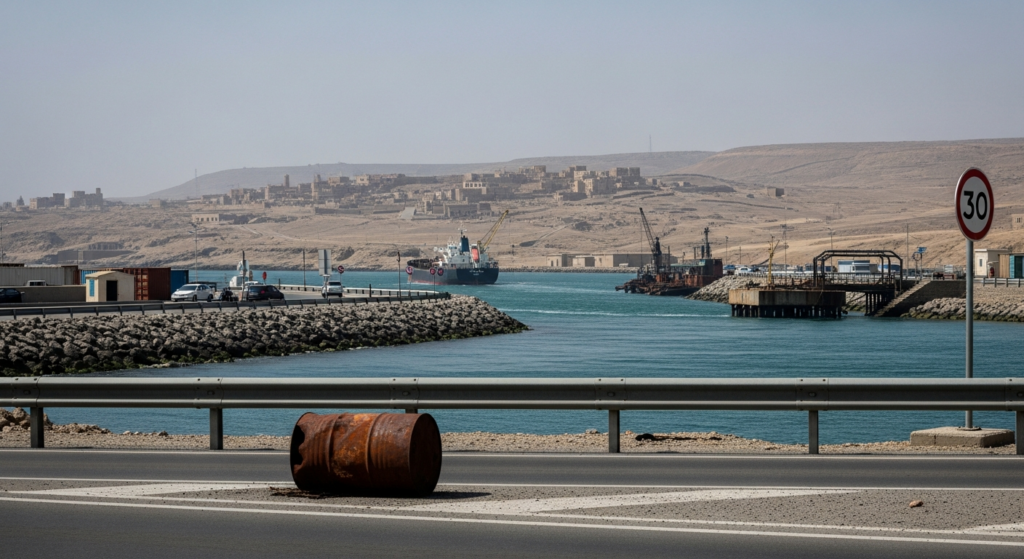
United States military forces have conducted strikes against targets in Iran, according to non-federal international and U.S. reporting. These actions are understood to be tied to a series of attacks on commercial vessels operating near the Strait of Hormuz, a critical maritime chokepoint for global oil shipments.
The military engagements follow the imposition of new oil-related sanctions targeting Iran. The combination of these strikes and sanctions has significantly elevated the perceived risk for shipping operations in the region, a development that could have far-reaching implications for global trade and energy markets.
The Strait of Hormuz, a narrow waterway connecting the Persian Gulf to the open ocean, is one of the world’s most strategically important passages. A substantial portion of the world’s seaborne oil passes through this strait daily, making any disruption a potential catalyst for volatility in international energy prices. Attacks on ships in this area, regardless of their scale, tend to generate immediate concerns about the security of oil supplies and the cost of transport.
The new sanctions, specifically targeting Iran’s oil sector, are designed to further restrict the country’s ability to export crude oil. While the immediate impact is on Iran’s economy, such measures can contribute to a tighter global oil supply, potentially leading to higher prices at the pump for consumers worldwide. The heightened shipping risk compounds this effect, as increased insurance premiums and rerouting efforts can add to the cost of delivering goods.
For communities like Florence, developments in the Middle East and global energy markets are often felt indirectly through changes in fuel prices and the broader economy. While the immediate operational military claims remain distant, the economic reverberations of such geopolitical events can influence everything from transportation costs for local businesses to the price of consumer goods that rely on global supply chains.
The situation underscores the interconnectedness of the global economy, where events thousands of miles away can eventually manifest as local economic pressures. Businesses and residents in Florence often monitor these international developments for their potential impact on daily life and long-term economic stability.
### Why it matters in Florence
The ongoing situation involving U.S. strikes on Iran and new oil sanctions, while geographically distant, has the potential to create ripple effects that could be felt in Florence. Major employers in the area, such as Honda of South Carolina Mfg. Inc., rely on stable global supply chains and predictable energy costs for their operations. Disruptions to shipping routes or significant increases in fuel prices, driven by heightened risks in critical waterways like the Strait of Hormuz, could translate into higher operational expenses for these companies. Such pressures might eventually influence consumer prices or the broader economic outlook for Florence County, impacting local households and the regional economy. The interconnectedness of global trade means that even seemingly remote geopolitical events can have tangible, albeit indirect, consequences for the Pee Dee region’s economic landscape.