Anglers casting lines into the waters around Florence face a fundamental choice: braided, fluorocarbon, or monofilament fishing line. Each type offers distinct advantages and disadvantages that can significantly impact a fishing trip, from lure presentation to detecting subtle bites.
Monofilament line, a traditional choice for many, is known for its forgiveness and buoyancy. It floats relatively well, which can be beneficial for certain topwater or suspending lure presentations. Its inherent stretch absorbs shock, making it more forgiving when fighting a strong fish or when a beginner angler is still mastering line control. This elasticity can prevent hooks from tearing out of a fish’s mouth and reduce the chance of line breakage during sudden runs. However, monofilament can also exhibit more “memory,” meaning it tends to coil or kink, especially after being stored on a reel for extended periods. This can affect casting distance and accuracy.
Fluorocarbon line offers a different set of characteristics, making it a popular choice for subsurface fishing. It is denser than monofilament and sinks, which helps in presenting lures deeper in the water column. One of its most significant advantages is its low visibility underwater. Composed of the same refractive index as water, fluorocarbon is nearly invisible to fish, a crucial factor when targeting wary species in clear water conditions. It also has very little stretch, providing greater sensitivity to detect bites and a more direct feel of the lure’s action. This lack of stretch, however, means it offers less shock absorption, requiring a more careful hand when fighting fish to avoid line snaps.
Braided line represents a modern evolution in fishing line technology, prized for its exceptional strength and sensitivity. Made from multiple strands of high-strength synthetic fibers, braided line is incredibly thin for its pound-test rating, allowing anglers to cast further and pack more line onto their reels. Its near-zero stretch transmits every vibration from the lure and every strike directly to the angler’s hand, offering unparalleled sensitivity for detecting subtle bites, especially in deeper water or when fishing in vegetation.
However, braided line’s lack of stretch also means it offers no shock absorption, making it crucial to use a drag system effectively. In clear water, the visibility of braided line can be a deterrent to fish. For this reason, many anglers opt to use a leader of monofilament or fluorocarbon line tied to the end of their braided main line. This leader provides the low visibility needed to fool cautious fish while retaining the strength and sensitivity of the braid.
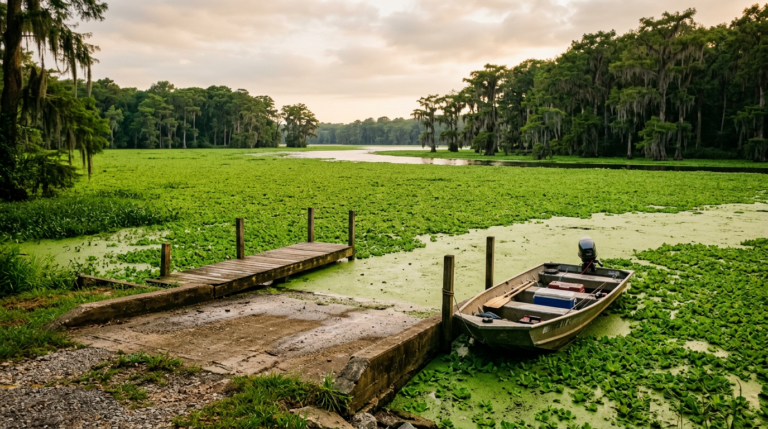
The choice between these lines often depends on the specific fishing scenario. For targeting bass in shallow, weed-choked waters of local ponds, the sensitivity and strength of braided line with a fluorocarbon leader might be ideal for pulling fish out of cover. For presenting finesse baits in clear lakes or the Great Pee Dee River, the near-invisibility of fluorocarbon could be the deciding factor. Monofilament might be the go-to for anglers who value its forgiving nature and its ability to keep topwater lures floating high on the surface.
Understanding these differences allows anglers fishing in Florence and the surrounding Pee Dee region to make informed decisions, ultimately leading to more successful outings on the water.